
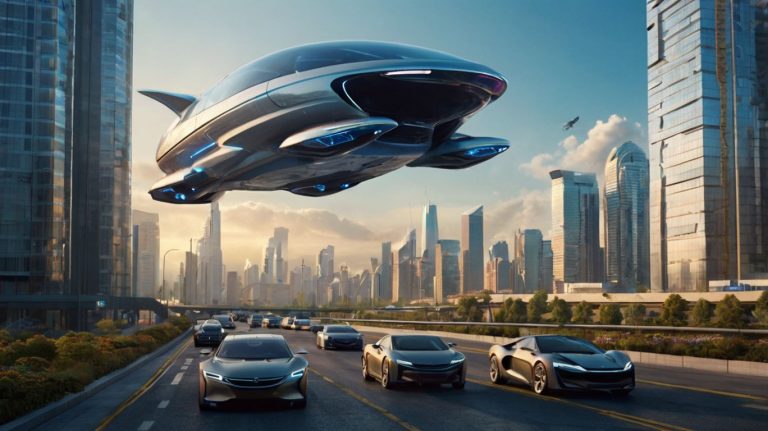
The year 2025 marks a turning point in the history of human mobility. For decades, the concept of flying cars existed only in science fiction novels and blockbuster films. Today, it has begun to take shape as a real-world technology poised to transform how we move, work, and live. Transportation is no longer confined to the ground. With breakthroughs in electric vertical takeoff and landing (eVTOL) aircraft, smart infrastructure, and sustainable energy, we are entering a new era where flying cars and other innovations redefine our understanding of freedom, convenience, and connectivity.
While flying cars remain the most eye-catching innovation, 2025 brings a wave of transformations across the transportation sector. From autonomous vehicles and hyperloop systems to green aviation and AI-powered logistics, the mobility landscape is changing rapidly. Interestingly, even unexpected industries like online entertainment and platforms such as togelslot88 login are taking advantage of these transportation shifts to enhance user engagement and offer futuristic services.
The Rise of Flying Cars
Flying cars, once dismissed as an impossible dream, are now undergoing test flights in several countries. Companies like Joby Aviation, Lilium, and Hyundai’s Urban Air Mobility division are leading the charge with eVTOL aircraft designed for short-distance urban travel. These vehicles promise to bypass congested roads, reduce travel times, and offer a safer and cleaner alternative to traditional cars.
By 2025, pilot programs in select megacities are already exploring air taxis for commercial use. Imagine booking a ride through an app, stepping into a sleek flying car at a designated hub, and arriving across the city in minutes. The promise of this technology lies not only in speed but also in sustainability. Most flying cars run on electric propulsion, drastically reducing carbon emissions compared to helicopters or traditional airplanes.
Smart Cities and Infrastructure
The adoption of flying cars would be impossible without parallel advancements in infrastructure. Smart cities around the world are preparing for this future by integrating advanced air traffic management systems, vertiports, and charging stations. Artificial intelligence plays a crucial role in managing the complex flight patterns of thousands of airborne vehicles, ensuring safety and efficiency.
In cities like Dubai, Singapore, and Los Angeles, authorities are already testing air corridors for flying cars. These smart traffic lanes in the sky are supported by sensors, satellites, and 5G connectivity, paving the way for seamless communication between vehicles and control systems.
Beyond Flying Cars: Other Innovations in 2025
While flying cars grab headlines, they are just one piece of the puzzle. The broader picture of transportation in 2025 includes:
-
Autonomous Vehicles: Self-driving cars are now safer and more widespread, supported by AI algorithms capable of handling complex traffic conditions.
-
Hyperloop Systems: Several routes are under construction, promising ultra-fast travel between cities at speeds exceeding 600 mph.
-
Green Aviation: Hydrogen-powered planes and hybrid-electric aircraft are redefining the future of long-distance air travel.
-
Micromobility: E-scooters, electric bikes, and compact autonomous shuttles provide affordable, eco-friendly urban transport options.
-
Logistics Revolution: AI and robotics streamline global supply chains, making deliveries faster and more efficient than ever before.
Environmental Impact and Sustainability
One of the biggest challenges facing modern transportation is sustainability. Climate change has placed immense pressure on governments and industries to reduce emissions. Flying cars and other electric mobility solutions represent a major step forward in tackling this issue. By 2025, renewable energy sources such as solar and wind power are increasingly integrated into transportation systems, ensuring greener mobility.
Additionally, cities are incentivizing people to adopt eco-friendly transport solutions through subsidies, tax breaks, and shared-mobility platforms. The push for sustainability goes hand in hand with innovation, creating a future where mobility is both futuristic and environmentally responsible.
Challenges Ahead
Despite the excitement, the road—or sky—to mainstream flying cars is not without obstacles. Issues such as safety regulations, air traffic control, cost of production, and noise pollution must be addressed before flying cars can become a daily reality for millions. Moreover, building the necessary infrastructure requires massive investment and global cooperation.
Privacy and cybersecurity also remain critical. As vehicles become more connected, protecting users from hacking and data breaches is a top priority. Just like online platforms such as togelslot88 login focus on secure access, transportation systems must ensure passenger safety in both the physical and digital realms.
How Transportation Redefines Society
Transportation innovations in 2025 are more than just technological feats; they reshape the way society functions. Flying cars could make suburban living more attractive, as people would no longer need to worry about long commutes. Businesses may rethink office locations, supply chains may become faster, and tourism could experience a renaissance with new ways to explore destinations.
Furthermore, access to faster and smarter transportation may bridge social and economic gaps. Affordable shared flying cars, much like public buses or trains, could democratize mobility and provide new opportunities for communities traditionally cut off from major urban centers.
As we stand on the threshold of this new era, it’s clear that 2025 is redefining transportation in unprecedented ways. Flying cars, once a symbol of science fiction, are gradually becoming a reality. Alongside innovations in autonomous vehicles, hyperloop systems, and sustainable mobility, humanity is witnessing a profound transformation in how we navigate the world.
The journey ahead is not without challenges, but the promise of a cleaner, faster, and more connected future makes the pursuit worthwhile. Just as digital platforms like togelslot88 login continue to adapt and evolve, the transportation industry is set to keep pushing boundaries—flying cars and beyond.
Read Also: Aplikasi Produktivitas yang Bikin Kerja Lebih Efisien



0 Comments